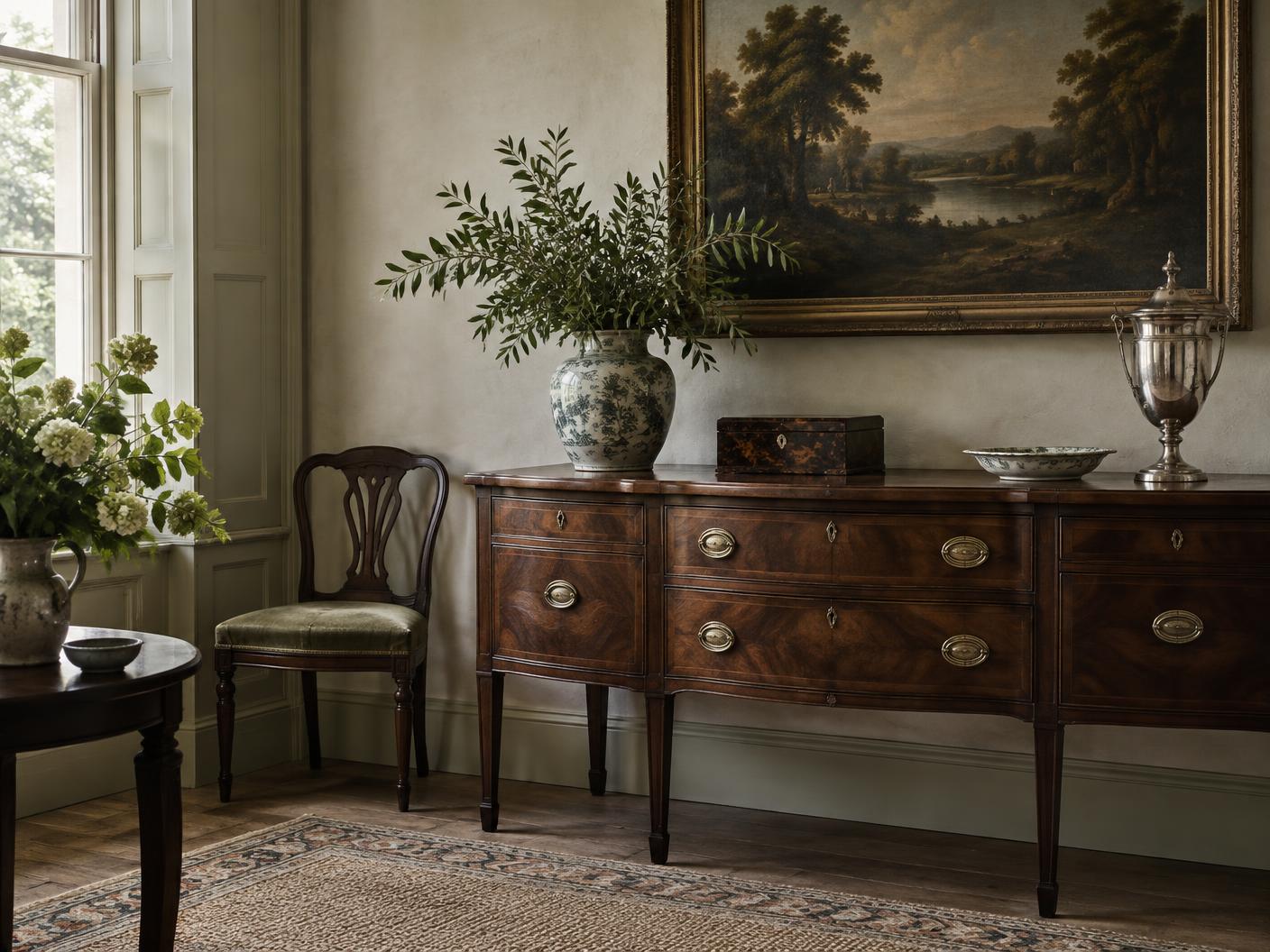
One of the biggest mistakes that can be made during a house clearance is deciding too quickly that something is worthless.
A property may contain hundreds or thousands of individual objects.
Most may have modest financial value. Some may be suitable for reuse or donation. Others genuinely need disposing of.
And occasionally there will be something that deserves much closer attention.
The challenge is knowing the difference.
Valuable objects are not always obvious
People naturally tend to associate value with objects that look expensive.
That can be misleading.
Fashion changes. Markets change. Some large pieces of antique furniture that once commanded substantial prices may now have relatively limited demand.
At the same time, smaller objects can be surprisingly interesting.
Jewellery, watches, silver, ceramics, paintings, collectables, early photographs, toys, coins, books and design objects can all merit consideration.
There is no substitute for actually looking.
Furniture
Devon properties frequently contain furniture accumulated across several generations.
Age alone does not determine value.
Maker, quality, design, construction, condition, rarity and current demand can all matter.
Mid-century furniture is a good example of why assumptions can be dangerous. Pieces that once looked simply old-fashioned can now appeal strongly to collectors and interior buyers.
Conversely, some traditional furniture that looks impressive may have a relatively small resale market.
Paintings and pictures
Pictures should be checked before disposal, particularly when they have been in the same family for many years.
Signatures, labels, inscriptions, gallery markings and provenance can all be relevant.
That does not mean an unsigned landscape hanging in a spare bedroom is secretly a masterpiece.
It simply means that pictures deserve to be considered rather than automatically placed in the disposal pile.
Jewellery, silver and watches
Small valuable objects are particularly easy to overlook during a large clearance.
Jewellery boxes, bedside drawers, dressing tables and cupboards may contain gold, silver, watches or other items whose value is not immediately obvious.
Silverware also deserves attention.
Hallmarks can provide useful information about material, maker and date, while plated items need to be distinguished from solid silver.
Ceramics and glass
China cabinets and kitchen cupboards can contain enormous quantities of ceramics and glass.
Most will be ordinary household items.
Occasionally there may be pieces by desirable factories, designers or makers.
Condition is especially important. Chips, cracks, restoration and missing components can dramatically affect desirability.
Again, the principle is not that everything is valuable.
It is that everything should not automatically be assumed worthless.
Collectables
Almost anything can become collectable.
Coins, medals, postcards, toys, model vehicles, sporting memorabilia, militaria, records, cameras and books are just a few examples.
The difficulty is that markets can be highly specific.
A collection that appears obscure to one person may be very familiar to a specialist collector.
Documents and provenance
Sometimes the paperwork accompanying an object is important too.
Receipts, old photographs, certificates, letters and records of ownership can help establish where something came from.
For family possessions in particular, separating an object from its history can sometimes remove useful information.
It therefore makes sense to look at associated documents before they disappear into separate boxes or disposal streams.
Should everything be professionally valued?
No.
That would be unnecessarily expensive and time-consuming for most clearances.
A better approach is triage.
The contents are assessed and anything potentially interesting is identified. If an object requires deeper expertise, specialist advice can then be sought.
That is very different from claiming that every object is an antique or promising unrealistic values. Learn more about our measured approach to antiques and valuations.
Why assessment should happen before clearance
Once a house has been emptied, opportunities disappear.
That is why we prefer to consider the property and its contents before the main clearance begins.
It allows decisions to be made deliberately.
Some possessions may stay with the family. Some may warrant valuation or sale. Others can be reused, donated, recycled or removed.
The point is not to turn every house clearance into an auction.
It is simply to make sure something worthwhile is not lost because nobody stopped to look.
House clearance with antiques awareness across Devon
Antiques awareness is built into the way Devon House Clearances approaches a property.
We provide house clearances throughout Devon and can consider furniture, paintings, ceramics, silver, jewellery, collectables and other objects as part of the initial assessment.